
What Happens to a 401(h) Account When You Die?
Understanding the fate of a 401(h) account after the participant's passing is crucial for both account holders and their beneficiaries. This guide clarifies the distribution process and tax implications.
Contents
Understanding the 401(h) Account
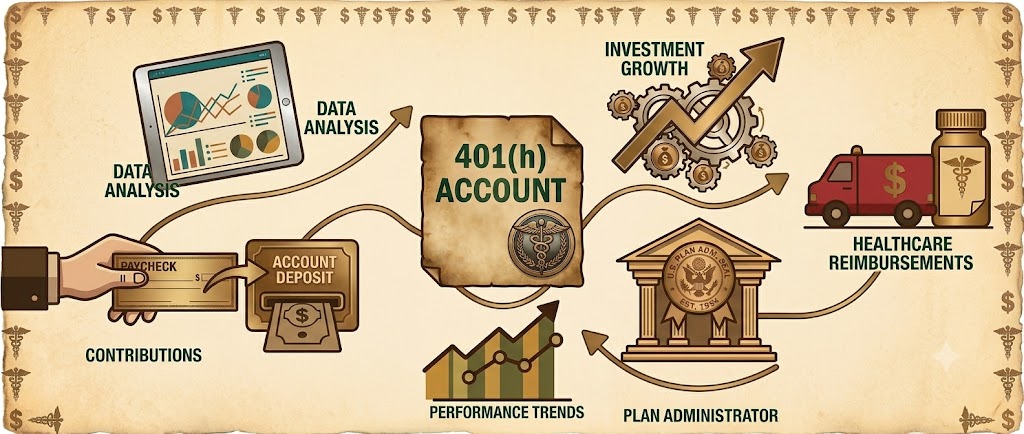
A 401(h) account is a specialized component of a qualified retirement plan, primarily designed to help individuals save for future healthcare expenses in retirement. Unlike typical 401(k) contributions that are solely for retirement income, 401(h) contributions are specifically earmarked for medical costs.
These plans offer a tax-advantaged way to pre-fund healthcare in retirement, providing a valuable benefit for employees and retirees alike. Contributions are typically made by the employer, and the funds grow tax-deferred.
The Role of Beneficiaries in 401(h) Plans
Upon the death of a 401(h) account participant, the designated beneficiaries are typically the recipients of the remaining funds. It's critical to understand that proper beneficiary designation is paramount to ensure your wishes are carried out efficiently and to avoid potential complications.
Failing to name a beneficiary, or having an outdated designation, can lead to the account being subject to complex probate processes, delaying the distribution of funds and potentially leading to unintended outcomes. Regularly review and update your beneficiary information to reflect any life changes.
Distribution Options for Spousal Beneficiaries
Spousal beneficiaries generally have the most flexible options when inheriting a 401(h) account. Often, a surviving spouse can elect to treat the deceased's 401(h) account as their own, effectively continuing the tax-deferred growth and using the funds for their own future qualified medical expenses.
This option allows for seamless continuation of the healthcare savings vehicle, often without immediate tax implications, and can be a significant benefit for the surviving spouse's retirement planning. The specific rules and available choices can vary based on plan design and IRS regulations.
Distribution Options for Non-Spousal Beneficiaries
Non-spousal beneficiaries, such as children, grandchildren, or other individuals, face different distribution rules compared to spouses. While they can generally inherit the funds, the ability to maintain the account as a 401(h) for their own ongoing healthcare expenses is typically not an option.
Instead, non-spousal beneficiaries usually receive the funds and must take distributions according to specific rules, often within a certain timeframe. These distributions are usually tax-free if used for qualified medical expenses for the beneficiary, but the tax implications can vary depending on how the funds are used and the beneficiary's individual tax situation. Consulting with a financial advisor is recommended to navigate these complexities.
Tax Implications of Inherited 401(h) Funds
One of the key advantages of a 401(h) account is the tax-free nature of distributions used for qualified medical expenses. This benefit generally extends to beneficiaries as well, meaning funds used for eligible healthcare costs are not subject to income tax.
However, if the inherited 401(h) funds are not used for qualified medical expenses by the beneficiary, they may become subject to ordinary income tax. The specific tax treatment can depend on the beneficiary's relationship to the deceased and prevailing tax laws. It's important for beneficiaries to maintain detailed records of medical expenses to substantiate tax-free distributions.
Ensuring a Smooth Transition for Your Beneficiaries
Proactive planning is key to ensuring a smooth transition of your 401(h) account after your passing. Regularly reviewing and updating your beneficiary designations is the most crucial step. Consider contingent beneficiaries as well, in case your primary beneficiary predeceases you.
Additionally, communicate your wishes to your beneficiaries and ensure they are aware of the existence of the 401(h) account and how it is intended to be used. Providing them with easily accessible documentation and contact information for the plan administrator or a financial advisor can significantly ease the process during a difficult time.
Frequently asked questions
Availability, tax treatment, and plan design depend on the facts and circumstances of the employer, plan document, participant group, and applicable law. 401h.com provides general educational information only — not tax, legal, actuarial, investment, or ERISA advice. Consult qualified tax, legal, actuarial, and plan professionals.
401h.com Editorial
401h.com
The 401h.com editorial team publishes plain-English explainers on 401(h) retiree medical benefit plans. Educational only — not tax, legal, actuarial, investment, or ERISA advice.
Related articles
Can You Use a 401(h) Account to Fund Long-Term Care Insurance?
A 401(h) account can generally be used to help fund long-term care insurance. But it comes with strings that most other medical expenses don't.
401(k) vs Money Purchase Plan: A Simple Comparison
But the money purchase plan isn't quite extinct, because it qualifies as a pension. And that single trait gives it a modern purpose: acting as the pension that a retiree medical account needs in order to exist.
Can a 401(h) Account Pay for Dental Expenses?
Done correctly, this is one of the cleanest deals in the code. The employer deducts the contribution to the 401(h) account. The account grows tax-free inside the trust. The reimbursement to the retiree for the dental expense comes out tax-free.