Investing 401(h) Assets: Commingling, Earnings, and Allocation
Discover the critical rules for investing 401(h) assets, from commingling funds to managing earnings and navigating allocation strategies.
Contents
Understanding the 401(h) Account Structure
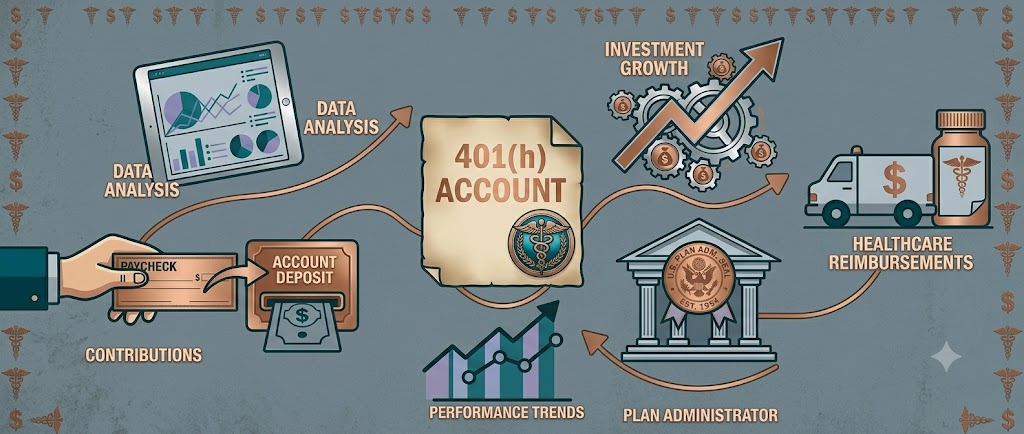
A 401(h) account is a special component of a defined benefit pension plan, designed specifically to fund retiree health benefits. While it operates alongside the main pension, its assets and purpose are distinct. This unique structure ensures that funds are dedicated solely to healthcare expenses for retirees, providing a valuable benefit often overlooked in retirement planning.
Setting up a 401(h) involves adhering to specific IRS regulations, which govern everything from contributions to distributions. The primary goal is to provide tax-advantaged savings for future healthcare costs, offering a significant advantage for both employers and employees.
Commingling of 401(h) and Pension Assets
One of the most frequently asked questions about 401(h) plans concerns the commingling of assets. While 401(h) assets mustbe held in a separate account within the pension trust, they can indeed be invested alongside the pension plan's assets in a commingled trust fund. This allows for potentially greater investment diversification and economies of scale.
However, it's crucial that the 401(h) portion remains actuarially discernible. This means that even if the funds are pooled for investment purposes, the records must clearly distinguish the 401(h) assets, liabilities, and earnings from those of the main pension plan. This separation is vital for compliance and ensuring that 401(h) funds are used exclusively for their intended purpose.
Managing Earnings and Investment Gains
All earnings generated from investing 401(h) assets are strictly earmarked for paying retiree health benefits. This includes interest, dividends, capital gains, and any other investment income. These earnings cannot revert to the employer or be used to supplement the primary pension benefits. This restriction reinforces the dedicated nature of the 401(h) account.
Any excess earnings within the 401(h) account that exceed the amount needed to pay current and projected future healthcare benefits for retirees must remain within the account. They will then be used to offset future employer contributions or fund future retiree health benefit payments. This ensures the long-term solvency of the healthcare portion of the plan.
Allocation Rules and Subordination
The IRS imposes specific allocation rules on 401(h) contributions to ensure the health benefit portion remains subordinate to the main pension plan. Generally, employer contributions to the 401(h) account in any given year cannot exceed 25% of the employer's total contributions to the defined benefit plan for that year. This 25% limit applies to contributions that fund the pension plan itself, which notably does not include contributions to the 401(h) account.
This subordination rule is critical for maintaining the tax-favored status of the 401(h) plan. It prevents employers from using the healthcare component as a primary vehicle for tax-advantaged savings, ensuring it remains an ancillary benefit to the core pension. Actuarial assumptions play a significant role in determining appropriate contribution levels and ensuring compliance with these limits.
Employer Deductibility of Contributions
Employers can generally deduct contributions made to a 401(h) account, subject to certain limitations. These contributions are considered employer expenses and can reduce the company's taxable income. However, the deductibility is often tied to the overall deductibility limits of the entire defined benefit pension plan.
It's important for employers to work with their actuaries and tax advisors to properly calculate deductible contributions and ensure compliance with all IRS regulations. Miscalculations can lead to penalties or the disallowance of deductions, undermining the financial advantages of the 401(h) plan.
The Future of Your 401(h) Investment Strategy
Effectively investing 401(h) assets is central to maximizing the long-term benefit for retirees. By understanding the rules surrounding commingling, earnings, and allocation, plan sponsors can develop robust investment strategies that align with their fiduciary responsibilities and plan objectives. Protecting these assets and ensuring their growth for future healthcare needs is a complex but rewarding endeavor.
As the costs of healthcare continue to rise, the role of a well-managed 401(h) account becomes even more critical for providing financial security to retirees. Regular review of investment performance, actuarial assumptions, and compliance with IRS guidelines will ensure the sustained success of your 401(h) plan.
Frequently asked questions
Availability, tax treatment, and plan design depend on the facts and circumstances of the employer, plan document, participant group, and applicable law. 401h.com provides general educational information only — not tax, legal, actuarial, investment, or ERISA advice. Consult qualified tax, legal, actuarial, and plan professionals.
401h.com Editorial
401h.com
The 401h.com editorial team publishes plain-English explainers on 401(h) retiree medical benefit plans. Educational only — not tax, legal, actuarial, investment, or ERISA advice.
Related articles
Can You Use a 401(h) Account to Fund Long-Term Care Insurance?
A 401(h) account can generally be used to help fund long-term care insurance. But it comes with strings that most other medical expenses don't.
401(k) vs Money Purchase Plan: A Simple Comparison
But the money purchase plan isn't quite extinct, because it qualifies as a pension. And that single trait gives it a modern purpose: acting as the pension that a retiree medical account needs in order to exist.
Can a 401(h) Account Pay for Dental Expenses?
Done correctly, this is one of the cleanest deals in the code. The employer deducts the contribution to the 401(h) account. The account grows tax-free inside the trust. The reimbursement to the retiree for the dental expense comes out tax-free.