
Forfeitures & Unused 401(h) Funds: Where Do They Go?
Unsure what happens to forfeited or unused funds in your 401(h) plan? This guide clarifies the rules and options for these often-misunderstood assets, ensuring you stay compliant.
Contents
Understanding 401(h) Plans and Their Funding
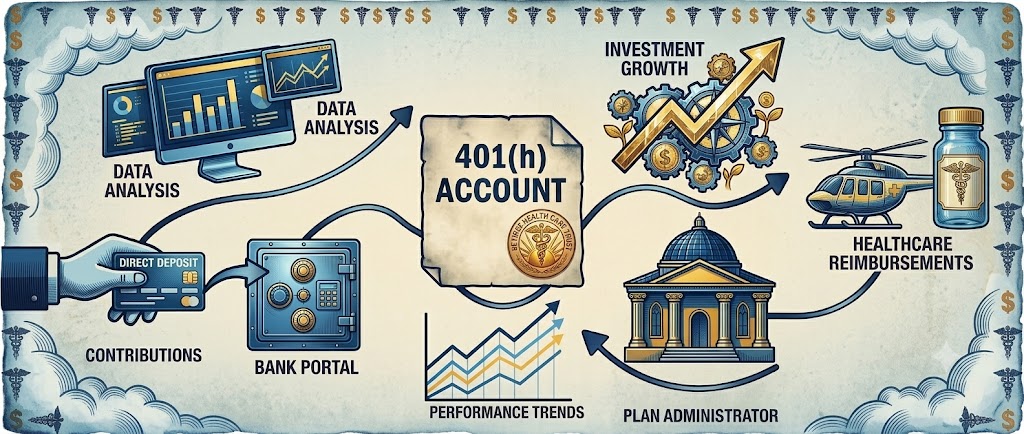
A 401(h) plan is a specialized account integrated within a defined benefit pension plan, designed to provide tax-advantaged funding for retiree healthcare benefits. It allows employers to pre-fund future medical expenses for their retired employees, offering both the employer and employees potential tax benefits.
The 'h' in 401(h) specifically refers to the subsection of the Internal Revenue Code that permits these accounts. Contributions made to a 401(h) are typically tax-deductible for the employer, and the investment earnings grow tax-free. When structured correctly, these plans can be a powerful tool for managing the long-term costs of retiree healthcare.
What Are Forfeitures in a 401(h) Plan?
Forfeitures occur in retirement plans when a participant leaves employment before becoming fully vested in their benefits. While more commonly discussed in 401(k) plans, similar situations can arise in the context of a 401(h) account, though the mechanics can differ.
In a 401(h) plan, forfeitures might not be as direct as unvested employer contributions to an individual account. Instead, they can relate to unused allocations or amounts earmarked for specific participants who no longer qualify, leading to a surplus within the healthcare account. The crucial aspect is how these amounts are then treated under IRS regulations.
Dealing with Unused 401(h) Funds
Beyond forfeitures, a 401(h) plan can accumulate 'unused' funds. This typically happens if the actual cost of retiree healthcare benefits turns out to be less than projected, or if a significant portion of the eligible retirees pass away prematurely, leaving a surplus in the account after all obligations have been met.
Having surplus funds in a 401(h) might seem like a good problem to have, but it comes with strict rules. The primary concern is preventing these tax-advantaged funds from being improperly diverted or used for purposes other than retiree healthcare.
Allocation and Reversion Rules for 401(h) Funds
Both forfeited amounts and unused funds in a 401(h) plan are subject to specific IRS and ERISA guidelines. These rules are designed to ensure the funds continue to serve their intended purpose—providing retiree healthcare—or are handled in a compliant manner if that purpose is no longer necessary.
Here's a general overview of the permissible uses and considerations:
- **Reduce Future Employer Contributions:** Often, the most straightforward approach is to use the surplus or forfeited funds to offset the employer's future contribution obligations to the 401(h) account. This helps stabilize plan funding without additional employer outlay.
- **Reversion to the Employer (with conditions):** In certain circumstances, and typically only upon plan termination or after all healthcare liabilities have been unequivocally satisfied, funds *may* revert to the employer. However, such reversions are usually subject to a significant excise tax, making them a less desirable option.
- **Transfer to the Pension Side (rare):** While complex and generally restrictive, some regulations might allow for the transfer of certain surplus funds to the pension portion of the defined benefit plan, provided very specific conditions and actuarial certifications are met. This is not a common occurrence and requires careful navigation.
Compliance and Best Practices
Managing 401(h) forfeitures and unused funds demands meticulous attention to detail and ongoing compliance. Failing to adhere to IRS and Department of Labor regulations can lead to severe penalties, including excise taxes and the potential disqualification of the plan, which would eliminate its tax-advantaged status.
It is imperative to maintain accurate records of all contributions, distributions, actuarial projections, and any reallocations of funds. Regular reviews by qualified actuaries and legal counsel specializing in employee benefits are essential to ensure the plan remains compliant and adequately funded, without accumulating excessive or improperly used surpluses.
The Future of Your 401(h) Plan Assets
Understanding the lifecycle of all funds within your 401(h) plan, including how forfeitures and unused balances are managed, is critical for plan sponsors. By diligently following regulatory guidelines and engaging with expert advisors, you can ensure your 401(h) plan continues to provide valuable, tax-advantaged retiree healthcare benefits for your employees while avoiding costly compliance missteps. Proactive management not only safeguards your plan's integrity but also reinforces your commitment to your retirees' well-being.
Frequently asked questions
Availability, tax treatment, and plan design depend on the facts and circumstances of the employer, plan document, participant group, and applicable law. 401h.com provides general educational information only — not tax, legal, actuarial, investment, or ERISA advice. Consult qualified tax, legal, actuarial, and plan professionals.
401h.com Editorial
401h.com
The 401h.com editorial team publishes plain-English explainers on 401(h) retiree medical benefit plans. Educational only — not tax, legal, actuarial, investment, or ERISA advice.
Related articles
Can You Use a 401(h) Account to Fund Long-Term Care Insurance?
A 401(h) account can generally be used to help fund long-term care insurance. But it comes with strings that most other medical expenses don't.
401(k) vs Money Purchase Plan: A Simple Comparison
But the money purchase plan isn't quite extinct, because it qualifies as a pension. And that single trait gives it a modern purpose: acting as the pension that a retiree medical account needs in order to exist.
Can a 401(h) Account Pay for Dental Expenses?
Done correctly, this is one of the cleanest deals in the code. The employer deducts the contribution to the 401(h) account. The account grows tax-free inside the trust. The reimbursement to the retiree for the dental expense comes out tax-free.