
Pairing a 401(h) With a Money Purchase Plan: Finding the Optimal Contribution Rate
Discover how combining a 401(h) with a Money Purchase Plan can create a powerful, tax-advantaged retirement and healthcare savings strategy.
Contents
Understanding the 401(h) and Money Purchase Plan Duo
Small business owners, high-income professionals, and self-employed individuals are constantly seeking robust strategies to maximize their healthcare savings. But more importantly, they are looking to minimize their tax liability.
While many are familiar with traditional retirement plans, the combination of a 401(h) account with a Money Purchase Plan offers a powerful, yet often overlooked, advantage: integrated healthcare savings within a qualified retirement framework.
A Money Purchase Plan is a type of defined contribution plan where employers make mandatory, fixed contributions to employee accounts. This predictability makes it a solid foundation for retirement planning. A 401(h), on the other hand, is a separate medical benefits account linked to a qualified pension or annuity plan, designed to pay for healthcare expenses in retirement.
The Strategic Advantage: Why Combine Them?
The primary appeal of pairing a 401(h) with a Money Purchase Plan lies in its dual benefit structure: secure retirement income and tax-advantaged healthcare savings. For employers, contributions to both components are tax-deductible, reducing current taxable income.
For participants, funds within the 401(h) grow tax-deferred and can be used to cover eligible medical expenses in retirement, tax-free. This integrated approach can significantly enhance post-retirement financial security.
Healthcare costs are a major concern for retirees, and pre-funding these expenses through a tax-advantaged vehicle like a 401(h) can alleviate a substantial burden. It provides a dedicated, protected source of funds for medical needs, separate from general retirement savings.
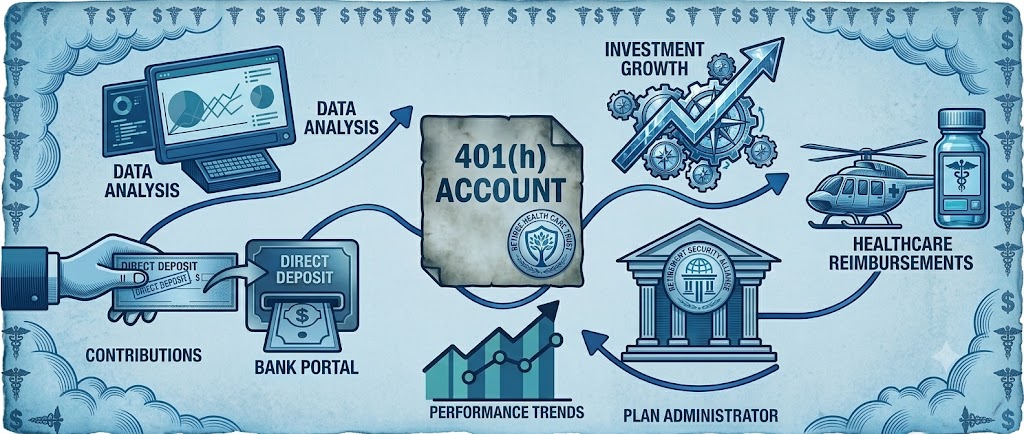
Combining a 401(h) with a Money Purchase Plan offers a significantly more robust and integrated approach to retirement and medical benefits than either plan provides in isolation. This strategic pairing maximizes both health care provisions and traditional retirement savings, illustrating a comprehensive benefit structure for retirees.
Optimizing Your Contribution Rate
Setting the optimal contribution rate involves balancing your desire for robust healthcare savings with the IRS subordination rules and overall retirement planning goals. The mandatory fixed contribution nature of the Money Purchase Plan provides a clear baseline. From there, you can strategically allocate additional contributions to the 401(h) up to the 25% limit.
Consider your projected retirement healthcare costs, current income, and tax situation. High-income earners might find maximizing their 401(h) contributions particularly attractive due to the immediate tax deductions and the long-term tax-free growth for qualified medical expenses. A financial advisor specializing in retirement plans can help model various scenarios to find your ideal contribution strategy.
Key factors to consider:
- Your expected healthcare expenses in retirement.
- Current income levels and tax bracket.
- Overall retirement savings goals.
- The mandatory contribution rate of your Money Purchase Plan.
- The 25% cumulative subordination limit for 401(h) contributions.
Who Benefits Most from This Strategy?
The 401(h) combined with a Money Purchase Plan is particularly advantageous for a specific demographic:
- Small Business Owners: Offers a powerful way to provide benefits for themselves and their employees while reducing business taxes.
- High-Income Professionals: Doctors, lawyers, and consultants can significantly reduce their taxable income and build substantial healthcare savings.
- Self-Employed Individuals: Provides a robust, tax-efficient structure for personal retirement and healthcare financial planning.
This setup allows for substantial tax-deferred growth on investments dedicated to future healthcare needs, a crucial component of comprehensive financial planning that often goes unaddressed.
Looking Ahead: Secure Your Retirement and Health
Integrating a 401(h) with a Money Purchase Plan offers a sophisticated and highly effective approach to retirement and healthcare planning. By leveraging the tax advantages and strategic contribution opportunities, individuals and businesses can build a more secure financial future. As healthcare costs continue to rise, proactive planning with such intelligent vehicles becomes not just beneficial, but essential. Exploring this option with a qualified plan administrator or financial advisor can unlock significant long-term advantages for your financial well-being.
Frequently asked questions
Availability, tax treatment, and plan design depend on the facts and circumstances of the employer, plan document, participant group, and applicable law. 401h.com provides general educational information only — not tax, legal, actuarial, investment, or ERISA advice. Consult qualified tax, legal, actuarial, and plan professionals.
401h.com Editorial
401h.com
The 401h.com editorial team publishes plain-English explainers on 401(h) retiree medical benefit plans. Educational only — not tax, legal, actuarial, investment, or ERISA advice.
Related articles
Can You Use a 401(h) Account to Fund Long-Term Care Insurance?
A 401(h) account can generally be used to help fund long-term care insurance. But it comes with strings that most other medical expenses don't.
401(k) vs Money Purchase Plan: A Simple Comparison
But the money purchase plan isn't quite extinct, because it qualifies as a pension. And that single trait gives it a modern purpose: acting as the pension that a retiree medical account needs in order to exist.
Can a 401(h) Account Pay for Dental Expenses?
Done correctly, this is one of the cleanest deals in the code. The employer deducts the contribution to the 401(h) account. The account grows tax-free inside the trust. The reimbursement to the retiree for the dental expense comes out tax-free.