
Funding Long-Term Care Tax-Free: The 401(h) Angle Most People Miss
Discover how a 401(h) plan can provide a tax-advantaged way to fund future medical and long-term care expenses, a strategy often overlooked by many advisors.
Contents
What is a 401(h) Plan?
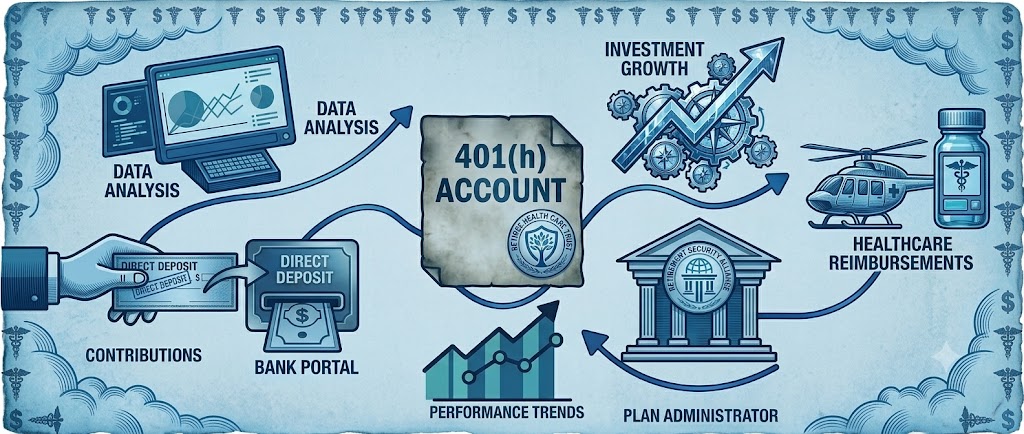
A 401(h) plan is a provision that can be added to a qualified pension or annuity plan, typically a defined benefit plan. Its primary purpose is to provide medical benefits, including long-term care, for retirees, their spouses, and their dependents. Unlike a typical 401(k) or even some HSAs, assets within a 401(h) grow tax-free, and qualified distributions for medical expenses are also tax-free.
The
One of the most important rules governing a 401(h) plan is that it must be "subordinate" to the main pension or annuity plan. This means that the employer's contributions to the 401(h) for medical benefits cannot exceed 25% of the employer's total contributions to the main plan (excluding those for past service costs) since the 401(h) was established. This subordination rule is key to ensuring the 401(h) remains a supplementary benefit rather than the primary focus of the retirement plan.
Who Benefits from a 401(h) Plan?
While not a household name, the 401(h) plan can be particularly attractive for certain individuals and small business owners looking for advanced tax planning strategies.
- **Small Business Owners:** Those with highly profitable businesses can leverage a defined benefit plan paired with a 401(h) to significantly boost their tax-deductible contributions and accumulate substantial tax-free funds for future medical expenses.
- **High-Income Earners:** Individuals with considerable disposable income who are proactively planning for rising healthcare costs in retirement can find a 401(h) to be a powerful tool.
- **Doctors and Medical Professionals:** Given the specific nature of their field and often higher earning potential, doctors can uniquely benefit from a plan designed to cover medical expenditures.
Integrating a 401(h) with Your Defined Benefit Plan
The true power of a 401(h) often shines when integrated with a defined benefit pension plan. A defined benefit plan allows for significant tax-deductible contributions, far exceeding the limits of 401(k)s or other defined contribution plans. By adding a 401(h) component, a portion of these substantial contributions can be directed towards a fund specifically earmarked for tax-free medical and long-term care expenses. This dual-purpose strategy not only builds a robust retirement income stream but also creates a dedicated, tax-advantaged healthcare nest egg.
- **Enhanced Tax Deductions:** Contributions to both the defined benefit and 401(h) components are generally tax-deductible for the employer.
- **Tax-Free Growth & Distributions:** Funds grow tax-free within the 401(h), and qualified medical distributions are tax-free.
- **Comprehensive Retirement Planning:** Addresses both income replacement and healthcare cost concerns in one integrated strategy.
Important Considerations and Compliance
While the benefits are compelling, establishing and maintaining a 401(h) plan requires careful planning and adherence to IRS regulations. It is not a do-it-yourself project and demands professional expertise.
- **Subordination Rule:** Strict adherence to the 25% contribution limit is paramount.
- **Separate Accounts:** Medical benefit funds must be held in a separate account from the pension funds.
- **Exclusive Benefit:** The funds in the 401(h) account must be used exclusively to pay for medical benefits.
- **Professional Guidance:** Consultation with an experienced actuary and ERISA attorney is essential for proper setup and ongoing compliance.
Securing Your Healthcare Future
As healthcare costs continue to rise, proactive planning for medical expenses in retirement is more critical than ever. The 401(h) plan offers a unique, tax-advantaged avenue to build a dedicated fund for these costs, often overlooked by conventional retirement planning. For small business owners and high-income earners, integrating a 401(h) with a defined benefit plan could be a game-changer, offering unparalleled tax benefits and peace of mind. Explore how this sophisticated strategy can secure your financial and healthcare future.
Frequently asked questions
Availability, tax treatment, and plan design depend on the facts and circumstances of the employer, plan document, participant group, and applicable law. 401h.com provides general educational information only — not tax, legal, actuarial, investment, or ERISA advice. Consult qualified tax, legal, actuarial, and plan professionals.
401h.com Editorial
401h.com
The 401h.com editorial team publishes plain-English explainers on 401(h) retiree medical benefit plans. Educational only — not tax, legal, actuarial, investment, or ERISA advice.
Related articles
Can You Use a 401(h) Account to Fund Long-Term Care Insurance?
A 401(h) account can generally be used to help fund long-term care insurance. But it comes with strings that most other medical expenses don't.
401(k) vs Money Purchase Plan: A Simple Comparison
But the money purchase plan isn't quite extinct, because it qualifies as a pension. And that single trait gives it a modern purpose: acting as the pension that a retiree medical account needs in order to exist.
Can a 401(h) Account Pay for Dental Expenses?
Done correctly, this is one of the cleanest deals in the code. The employer deducts the contribution to the 401(h) account. The account grows tax-free inside the trust. The reimbursement to the retiree for the dental expense comes out tax-free.